Countess of Chester Hospital brings back ‘surprise’ cardiac arrest training to boost emergency readiness
3 June 2026
Staff at the Countess of Chester Hospital NHS Foundation Trust are once again taking part in unannounced cardiac arrest simulations, helping to ensure teams are ready to act quickly and confidently in a real emergency.
Cardiac arrests at the hospital are thankfully rare, affecting fewer than one in every 1,000 patients admitted - which is one of the lowest rates in the region.
While this reflects the high standard of care patients receive, it also means staff have limited opportunities to practise these life‑saving skills, while working together as a team in real situations.
Reintroducing simulation training allows teams to practise safely in a realistic setting, with these unannounced exercises bringing together staff from different professions to respond just as they would to a real cardiac arrest.
Surprise simulations are planned in advance with a designated team member to allow arrangements that ensure clinical time and patient care are not disrupted.
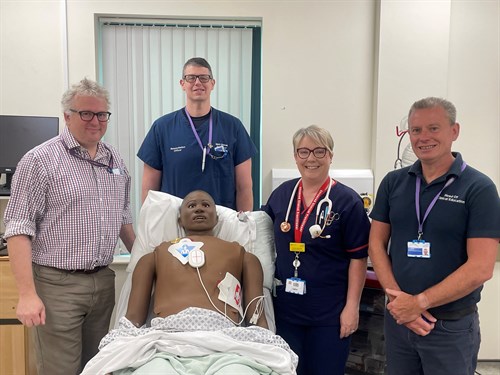
When the training team arrives unannounced, selected participants are informed of their involvement, and the objectives of the session are clearly outlined at the start.
Although everyone involved in the training refresh are already highly trained, the focus is on working well as a team - clear leadership, good communication and smooth coordination - as well as refreshing skills that may not be used often.
John Bethel, Resuscitation Services Manager at the Trust, explained:
“These simulations are designed to feel as close to real life as possible. Cardiac arrests don’t always happen on wards - they can occur in corridors, outpatient areas or even outside on hospital grounds - so practising in different locations helps staff prepare for the additional challenges they might face, such as limited space or access to equipment.
"Alongside core skills like CPR and defibrillation, we also focus on the human factors, including situational awareness and decision‑making under pressure.
"Staff have been really engaged, and the immediate debriefs after each exercise have been particularly valuable for learning and reflection.”
Nigel Scawn, Medical Director at the Trust added:
“We have invested significantly in our simulation facilities, including high‑fidelity mannequins, and we’re using learning from real incidents to shape future training and continuously strengthen patient safety.
“This programme has been carefully designed with staff wellbeing in mind, recognising that realistic simulation can be demanding even for experienced clinicians.”
“Throughout each session, staff are fully supported, with dedicated time afterwards for structured debriefs to reflect on what worked well, agree key learning points and check in with colleagues,” he added.
Continual learning is central to the Trust’s five-year plan to enhance services and build a stronger workplace culture.
By investing in staff development and confidence, the Trust can ensure patients receive the right care, in the right place, at the right time.
Notes to editor:
In a timely development, The Trust has announced the arrival of Sim Man, a new CPR training mannikin funded through charitable donations received from The Ursula Keyes Trust Fund (£50,000) and the Countess of Chester Hospital Fund (£46,000).
Sim Man offers enhanced simulation capabilities that mimic real-life cardiac arrest scenarios with startling realism.
Sim Man is part of a broader investment in high-tech, interactive CPR training led by the hospital’s Resuscitation Team, which brings over 25 years of combined expertise.
The team delivers immersive, hands-on sessions using advanced equipment such as feedback-enabled defibrillators and illuminated mannikins that guide correct technique.